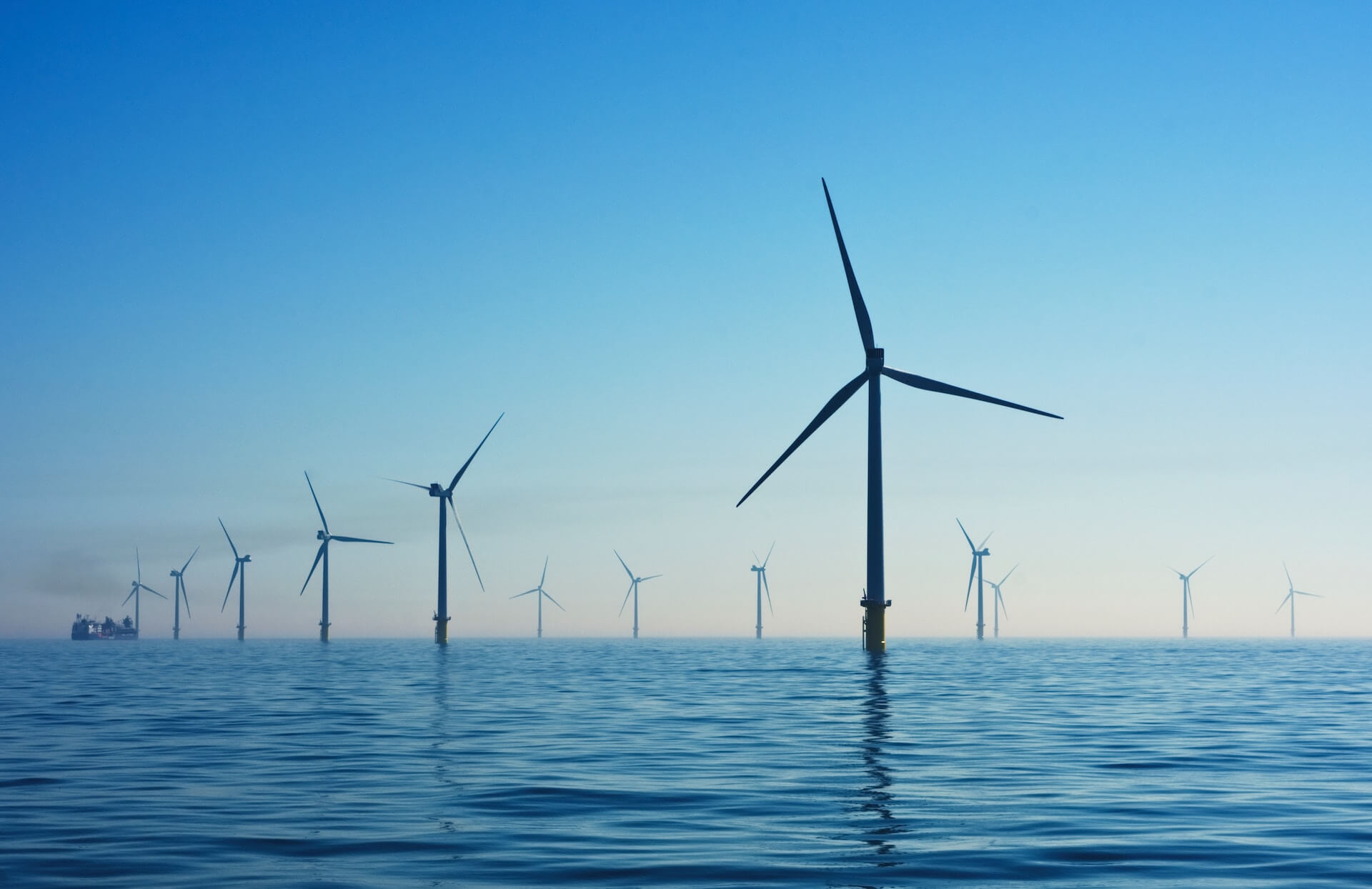
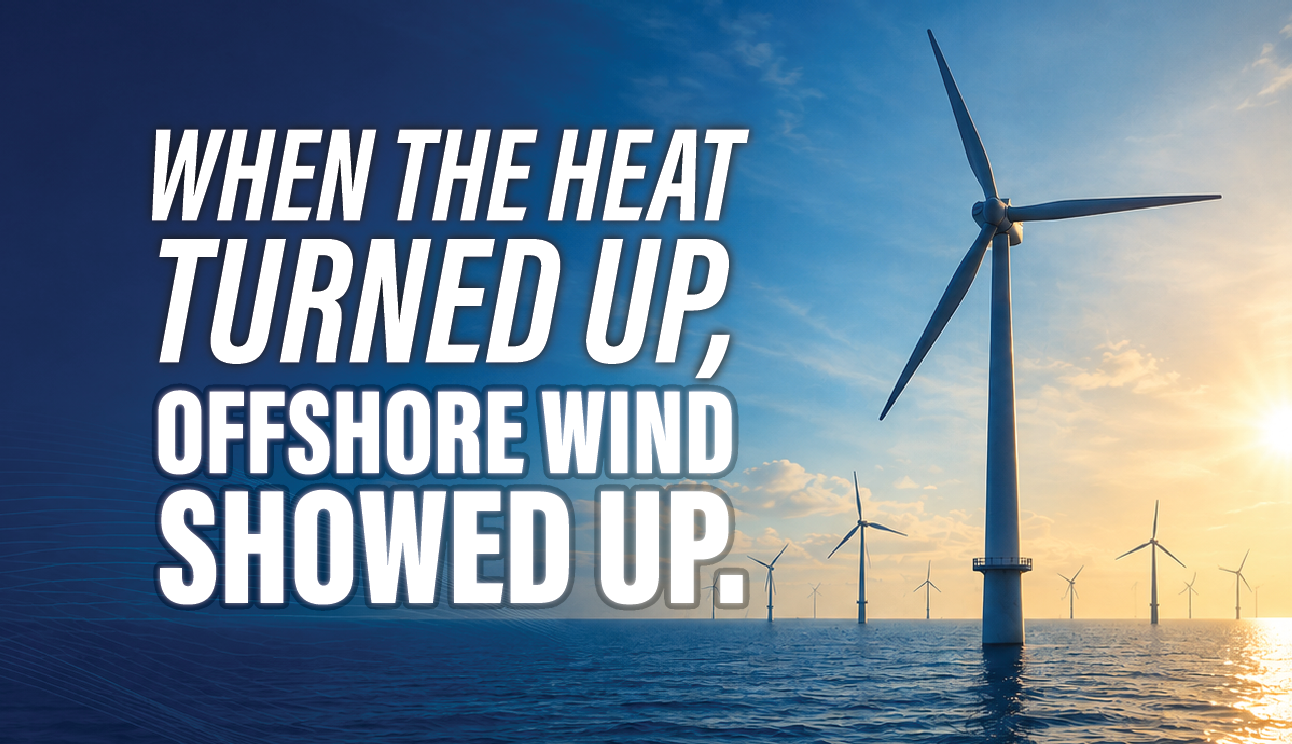
As record-breaking temperatures pushed electricity demand to extreme levels across the Northeast in early July this year, offshore wind demonstrated exactly why it has become an essential part of America’s energy portfolio: it showed up when consumers and grid operators needed it most.
During the four-day July heat wave, grid operators from New York to New England issued alerts as soaring temperatures drove up electricity demand and strained energy systems. The New York Independent System Operator (NYISO) declared an Energy Watch on July 2, PJM issued Maximum Generation and Load Management Alerts on July 1 and 2, and the U.S. Department of Energy took emergency actions to ensure sufficient electricity supply.
While traditional power systems faced growing pressure, offshore wind farms off the Northeast coast delivered strong, sustained performance.
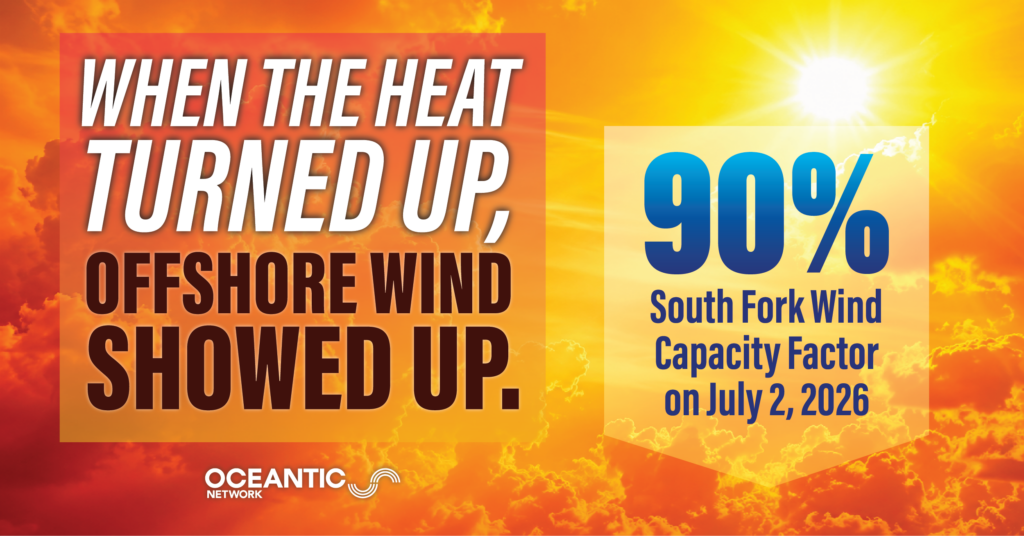
South Fork Wind Reached Nearly 90% Output During Peak Demand
On July 2, one of the hottest days of the summer, South Fork Wind achieved a capacity factor approaching 90%, generating electricity at nearly its maximum potential output. For context, the project’s average capacity factor during the heat wave was 74.7%, outperforming the roughly 50% capacity factor typically achieved by New York’s top-performing natural gas plant.
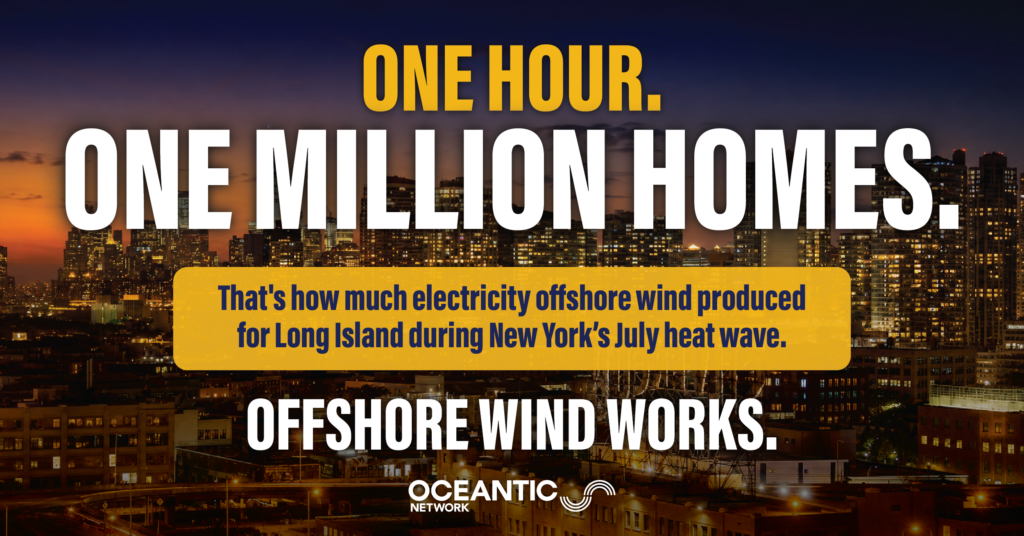
At its peak, offshore wind generation produced enough electricity to power approximately one million homes for a full hour.
These results underscore an increasingly important reality: offshore wind is not merely adding clean energy to the grid. It is helping provide reliable power during periods of extreme stress and rapidly rising electricity demand.
Reliability During Extreme Weather
As temperatures climbed across the Eastern United States, a dangerous heat dome contributed to widespread grid stress. Thirteen all-time temperature records were broken, and eighteen more were tied across nine states.
Yet throughout the event, offshore wind conditions remained strong. Wind speeds exceeded 30 miles per hour every day during the heat wave, enabling projects such as South Fork Wind to maintain high levels of generation precisely when air conditioners, businesses, and critical infrastructure were driving electricity demand upward.
The timing matters.
Extreme weather events are becoming more frequent, and electricity demand is increasing as states electrify transportation, buildings, and industry. Offshore wind provides a local, domestic energy source capable of producing large amounts of electricity during periods when grid reliability is most important.
Lower Prices Through More Local Energy Supply
The benefits extended beyond keeping the lights on and air conditioners running.
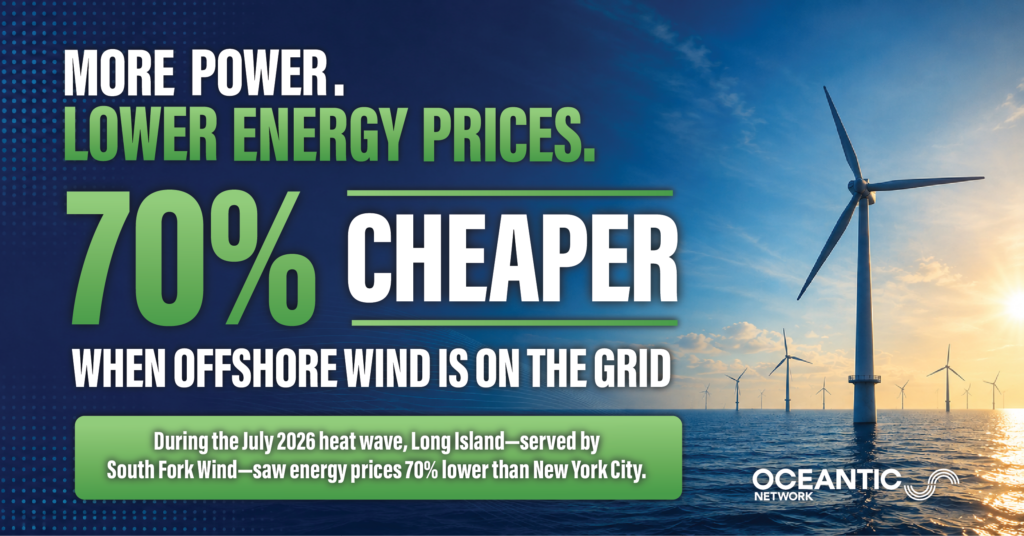
Regions with greater access to clean energy resources experienced substantially lower wholesale electricity prices during the heat wave. On Long Island, wholesale energy prices were approximately 70% lower than prices in New York City during the event.
This illustrates a fundamental market principle: when more electricity supply is available, particularly local generation that does not rely on volatile fuel costs, price pressure can be reduced. Offshore wind adds new generation capacity to the grid, helping diversify energy resources and limiting the need for expensive peaker plants to generate power on short notice.
For consumers and businesses already facing rising energy costs, those impacts matter.
A Growing Role in America’s Energy Future
The Northeast’s operating offshore wind projects’ performance during the July heat wave provided a real-world demonstration of offshore wind’s value to grid operators, consumers, and local economies.
The results are clear: offshore wind helped strengthen reliability, contributed substantial energy production during peak demand, and supported more affordable electricity prices during one of the most challenging periods of the summer.
As energy demand continues to grow, these outcomes reinforce why offshore wind is an increasingly important part of an all-of-the-above energy strategy. The industry is delivering more than clean power. It is delivering reliability, resilience, and economic value when Americans need it most.
Source data: Oceantic Network, American Clean Power, Grid Status, NYSERDA, Ørsted, and PJM.