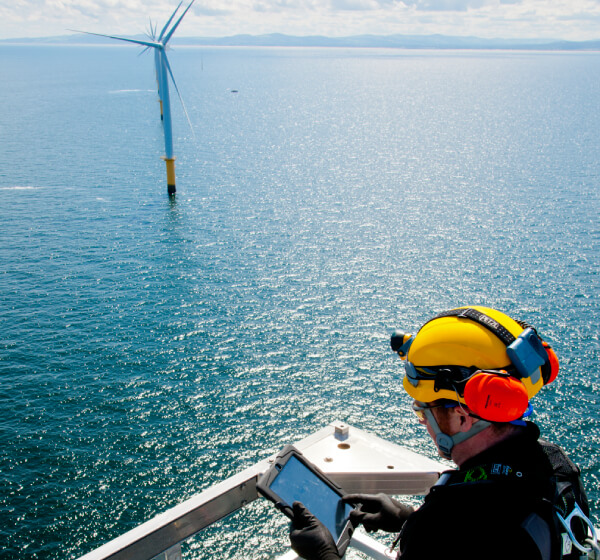
Offshore wind projects depend on turbines, vessels, ports, cables, and a supply chain capable of bringing them all together. But delivering that infrastructure ultimately depends on people — and building a workforce with the right skills, certifications, and offshore experience can be every bit as complex as the physical project itself.
For Atlas NextWave, that challenge has been at the center of its work in offshore wind for more than a decade. Today, the company supports projects across the industry, from early development through construction, commissioning, and long-term operations, while helping connect international offshore expertise with a growing U.S. workforce.
From Global Experience to a Growing U.S. Workforce
Atlas NextWave’s offshore wind roots date to 2012, when Atlas Services Group acquired Main Source Offshore People, a specialist workforce provider serving offshore renewables, subsea cable installation, and hydrographic industries.
The combination brought together Atlas’ decades of energy and marine workforce experience with a team already deeply embedded in offshore renewables. Since then, the company’s experience has grown to encompass more than 100 offshore wind farms worldwide.
That international experience has become particularly important as the U.S. market has moved from development into construction. Building a domestic offshore wind workforce requires more than recruiting for individual positions. Projects must navigate specialized training and certification requirements, union and non-union labor needs, immigration and compliance, complex mobilizations, and shortages of workers with both offshore and renewable energy experience.
Atlas NextWave works across those challenges, pairing experienced international talent with efforts to develop local and regional workforces and transfer knowledge from more mature offshore markets.
The goal is not simply to fill vacancies.
“Workforce should never be an afterthought,” the company says. Instead, workforce planning should begin early enough to anticipate skills shortages, local hiring requirements, compliance challenges, and mobilization risks before they begin affecting project delivery.
Putting Workforce Strategy Into Practice
That approach is now playing out across some of the largest offshore wind projects under construction in the United States.
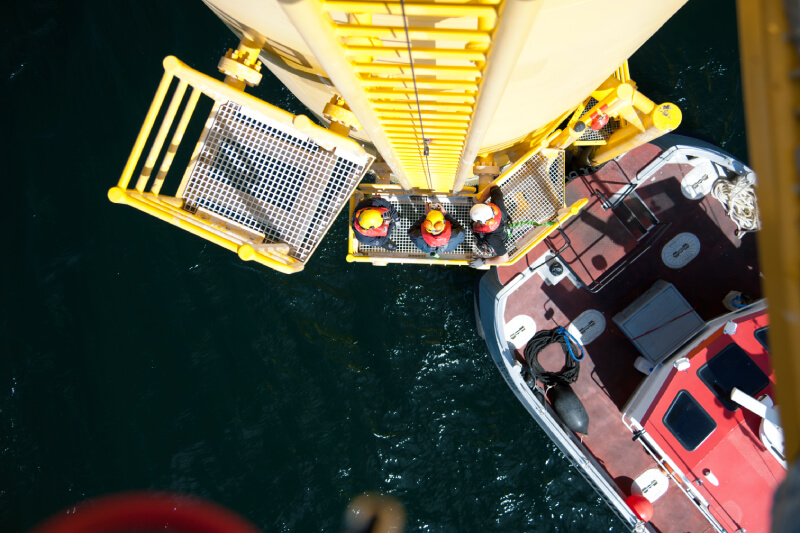
Atlas NextWave is supporting Sunrise Wind, Empire Wind, and Coastal Virginia Offshore Wind, deploying both white- and blue-collar personnel across project work packages. The company says its workforce has recently surpassed its previous record for union man-hours in the U.S. offshore wind sector.
One milestone stands out: crewing the first Jones Act-compliant wind turbine installation vessel (WTIV) and helping create long-term career opportunities for more than 70 U.S. mariners.
The work represents the larger transition Atlas NextWave sees underway in the U.S. market — using expertise developed in establishedoffshore industries and international wind markets to build a domestic workforce capable of supporting projects for the long term.
That workforce has also had to adapt to the industry’s recent uncertainty.
When a federal stop-work order affected a project supported by Atlas NextWave, more than 200 construction workerswere temporarily unable to work. The company focused on keeping its workforce informed and prepared to return. When the order was lifted, Atlas NextWave remobilized nearly the entire workforce within 72 hours.
The experience reinforced the importance of workforce planning not only for project growth, but also for resilience. Maintaining relationships with workers, anticipating logistical challenges, and having systems ready to mobilize personnel quickly can become critical when project conditions change with little notice.
Taking the Long View
Atlas NextWave describes its approach to offshore wind as being “built for the long game.”
In the United States, that means continuing to develop local and regional workforces while drawing on specialized expertise where it is still needed. Globally, it means moving talent, knowledge, and lessons learned among offshore wind markets in Europe, Asia-Pacific, the United States, and emerging regions.
The company is also expanding its workforce support into adjacent sectors including grid and transmission, energy storage, hydrogen, marine infrastructure, and conventional offshore energy. Across those markets, Atlas NextWave is moving beyond transactional recruitment toward integrated workforce planning, compliance, mobilization, payroll, training, and local workforce development.
For Atlas NextWave, membership in Oceantic Network has provided another way to build the relationships that support that work. The company has participated in IPF events across the country, using them to connect its U.S. and international teams with clients, candidates, and suppliers. It also points to Oceantic’s industry reports and U.S. supply chain database as resources that have helped generate new connections and business opportunities.
As the U.S. offshore wind industry navigates its next phase, Atlas NextWave sees workforce development as part of the infrastructure the industry is building — one that can retain skills, transfer knowledge, and leave behind a stronger domestic talent base.
Its philosophy for what comes next is fittingly straightforward: “Next Challenge, Please.”