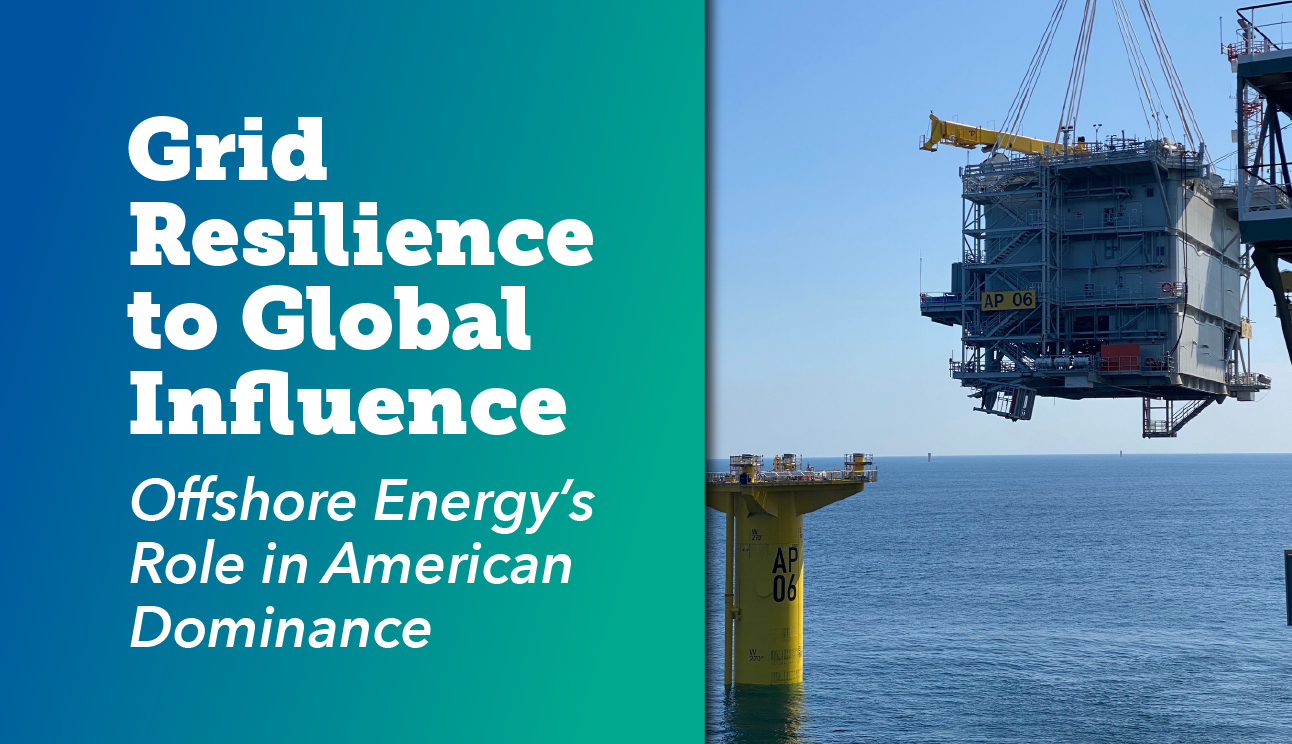
Offshore wind is more than a single energy technology: it’s a cornerstone of secure infrastructure, domestic supply chains, and maritime capability in a world of surging electricity demand.
That framing shaped the 2026 IPF session, “The Role of Offshore Energy in Achieving American Dominance,” which explained how viewing offshore wind as national power infrastructure can help unlock greater grid resilience, industrial capacity, allied energy security, and U.S. geopolitical leadership.
Moderator Jason Ryan (Founder & Principal, Ryan Strategic Communications), set the tone of the conversation, explaining that by leading with fact-based analysis and keeping defense coordination front-and-center, the U.S. can lead––not follow––in the next energy chapter.
Offshore Wind as Strategic Infrastructure
Offshore wind provides steady power to coastal demand centers, helps stabilize the grid, bolsters advanced manufacturing and steel production, underpins other critical infrastructure sectors, and its vessel, port, and crew requirements significantly bolster American’s maritime presence and capabilities. In short, it is strategic infrastructure that tightens the link between energy security and economic security, explained panelist Leslie Abrahams (Deputy Director and Senior Fellow, Energy Security and Climate Change Program, The Center for Strategic and International Studies (CSIS)).
Building on that frame, panelist Commander Kirk Lippold (Ret. U.S. Navy), connected those outputs directly to national objectives: explaining how offshore wind can deliver energy dominance and restore U.S. leadership in an arena where other nations are rapidly advancing. Lippold cautioned that while the U.S. debates its offshore wind future, China is building, manufacturing, and exporting at breakneck speed. The nation is also using offshore wind as a geopolitical tool, he said, exporting turbines and securing footholds in regions like South America—creating 30‑ to 40‑year leverage over countries that rely on Chinese-built infrastructure.
Both speakers emphasized the importance of focusing on the risks of under-investing in this technology, rather than arguments over the mitigation of perceived security concerns. Abrahams stressed that the biggest concerns are missing out on the second-order economic and industrial spillovers that strengthen U.S. competitiveness, such as lost industrial capacity, reduced supply chain resilience, and diminished geopolitical standing.
“This is not a wait-and-see moment,” Abrahams told the audience.
With offshore wind capacity projected to triple within five years—and Europe targeting 100 GW of joint offshore wind capacity in the North Sea—choices made now will shape international technology and security standards for decades. Opting out doesn’t stop the process—it just means it proceeds without U.S. influence, Lippold warned. He cautioned that stepping back would cede market share and strategic leverage to foreign competitors creating vulnerabilities for the U.S. and allies as supply chains, software, and critical parts consolidate abroad.
National Security Benefits and Defense Integration
On integration with defense operations, Lippold emphasized that U.S. offshore wind projects undergo extensive environmental and Department of Defense reviews, including radar and communications impact studies. Identified effects are mitigated through software, firmware, and—critically—operator training. The Navy’s routine operations around turbines build proficiency across subsurface, surface, and air domains, improving combat readiness and the ability to safeguard global sea lanes. While turbines don’t provide physical cover, Lippold explained they can introduce tactical ambiguity that complicates adversary decision‑making and supports deterrence.
Panelists also noted that offshore arrays have the potential to support broader security objectives, and that developers have indicated their commitment to supporting national security. Industry awareness and existing mitigation efforts demonstrate a commitment from offshore wind developers to address national security concerns. And natural opportunities exist to invest in dual-use technologies that can serve both theoffshore wind and defense industries.
Today, the offshore wind supply chain touches more than 40 states, from component manufacturing to logistics and workforce development. With more than $40 billion already invested across the industry, projects are revitalizing local economies and strengthening assets that also support defense logistics. Building that expertise domestically boosts competitiveness beyond power generation.
The bottom line: Treat offshore wind as strategic infrastructure. Build the narrative with facts and keep the defense community engaged. Ultimately, both speakers emphasized that the greater national security risk lies in not advancing projects that harden the grid, grow domestic manufacturing, and strengthen allied resilience.