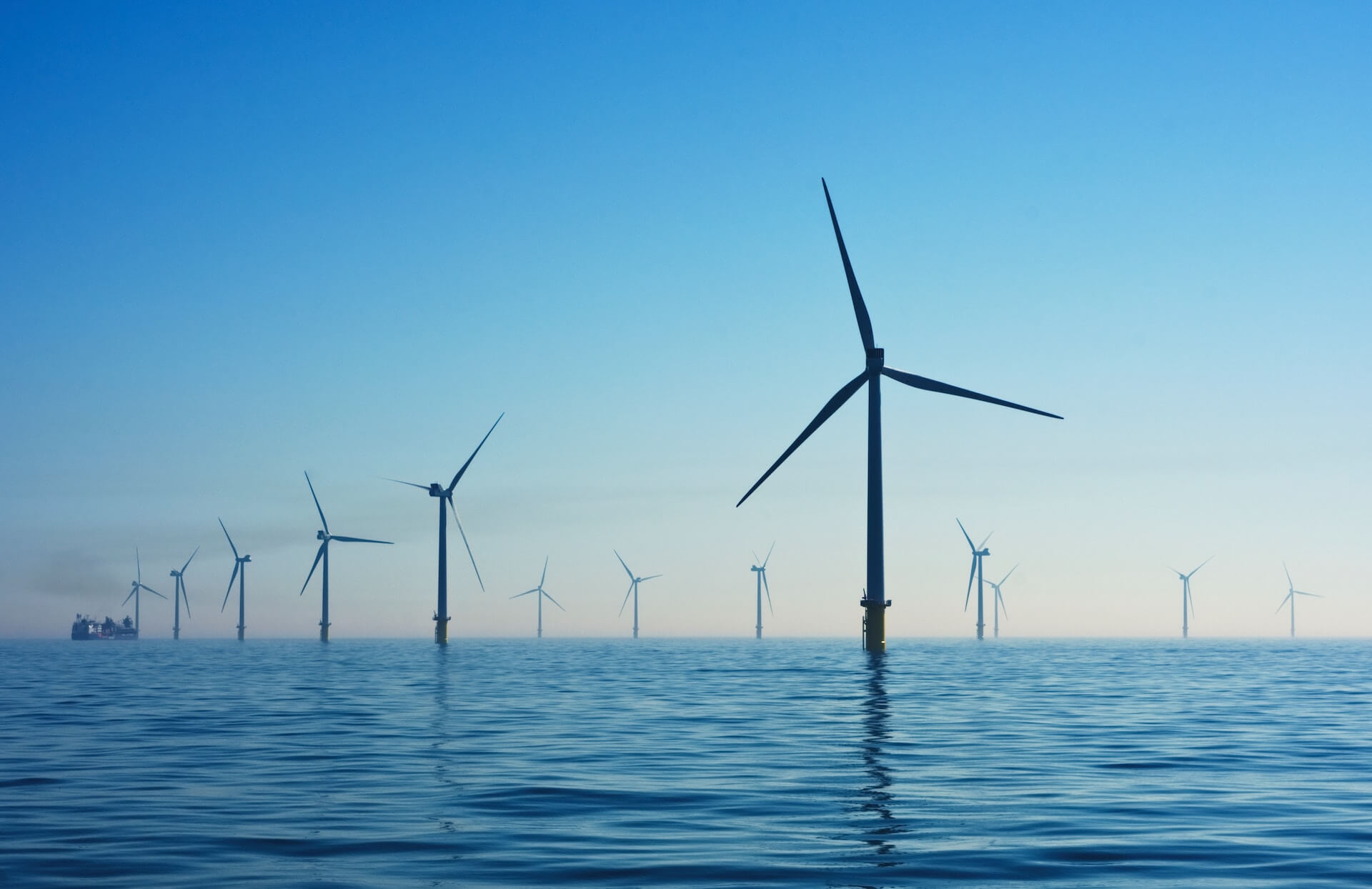
For years, discussions about offshore energy in Washington have often started with a single question: How do offshore energy projects affect military operations?
At a New York Climate Week event hosted by Oceantic Network and E3G, leaders from technology, finance, and industry challenged the audience to ask a different question: What if offshore energy infrastructure can strengthen national security?
That theme framed the discussion from the opening remarks delivered by Liz Burdock, President and CEO of Oceantic Network. Looking around a room filled with defense strategists, policymakers, technology providers, developers, insurers, and investors, Burdock argued that America needs to move beyond viewing offshore energy and national defense as competing priorities.
Instead, she urged participants to recognize a growing reality: energy security and national security are increasingly interconnected. Modern offshore infrastructure can support both missions at the same time.
Many of the technical concerns that have historically dominated conversations around offshore wind and military readiness have already been studied extensively and addressed through engineering and planning. The moreimportant opportunity today is understanding how offshore platforms, subsea cables, advanced sensors, and domestic maritime infrastructure can contribute to maritime domain awareness, communications resilience, and energy security.
Reframing Offshore Infrastructure as Strategic Infrastructure
The panel opened by examining how the global security environment around offshore infrastructure has changed dramatically in recent years.
Representatives from CSIS and E3G discussed how countries in Europe increasingly view offshore energy assets as strategic infrastructure rather than purely commercial facilities. As threats to subsea cables, pipelines, and offshore assets have become more commonplace, governments have been forced to think differently about protecting critical infrastructure at sea.
The discussion highlighted a key shift in thinking: offshore platforms and subsea networks are no longer simply energy projects. They are components of a nation’s broader infrastructure system, with potential applications ranging from maritime surveillance to communications resilience and domain awareness.
Several panelists emphasized that energy infrastructure should be viewed through the same lens as other strategic assets that support economic security, public safety, and national resilience.
A New Role for America’s Maritime Supply Chain
Another major theme of the discussion centered on domestic industrial capacity.
Drawing on Oceantic’s work across the offshore energy supply chain, the discussion explored how ports, shipyards, specialized installation vessels, steel fabrication facilities, subsea technology providers, and marine engineering capabilities contribute not only to energy development but also to broader national capabilities.
Panelists described these assets as part of America’s strategic maritime foundation. Investments in heavy-lift ports, shipyards, and domestic manufacturing help create the industrial capacity needed to build, maintain, and protect critical offshore infrastructure. These same capabilities can also support national preparedness and long-term economic security.
The conversation reinforced a central idea from the opening remarks: building offshore energy infrastructure creates value that extends well beyond electricity generation. It strengthens the domestic supply chain and creates assets that can serve multiple national objectives.
Technology Is Already Changing What’s Possible
Panelists also explored how existing technologies are making dual-use offshore infrastructure increasingly feasible.
Indeximate highlighted advances in distributed acoustic sensing and subsea monitoring systems that can use existing fiber infrastructure to detect vessel activity, monitor cable health, identify anchor drags, and provide greater visibility into activity around offshore assets. Importantly, they emphasized that many of these technologies already provide commercial value for developers and asset owners. Monitoring systems can help protect infrastructure, reduce maintenance costs, and improve operational performance while also supporting broader maritime awareness objectives.
That dual benefit emerged repeatedly throughout the discussion. Rather than creating entirely new systems, the opportunity may lie in leveraging infrastructure already being deployed offshore and maximizing its value for multiple stakeholders.

The Financing and Insurance Challenge
While the technological opportunity is increasingly clear, panelists acknowledged that implementation will depend on creating confidence for investors, developers, lenders, and insurers.
Representatives from international insurance firm Marsh focused on questions surrounding risk allocation, underwriting standards, liability frameworks, and insurance coverage for infrastructure carrying potential security functions. The discussion explored how insurers distinguish between accidental damage, deliberate interference, and state-sponsored activity, as well as the policy clarity needed to support future investment.
This issue directly reflected another point raised by Burdock in her opening remarks: private capital requires certainty. Developers and financial institutions need predictable regulatory, insurance, and legal frameworks before large-scale deployment of dual-use infrastructure can occur. The panel repeatedly returned to the importance of public-private partnership. National security objectives cannot simply be layered onto commercial projects without clear frameworks governing responsibilities, costs, risks, and benefits.
Learning from Europe While Building an American Model
Throughout the event, Europe served as a recurring reference point.
Panelists explained that European governments are no longer treating dual-use offshore infrastructure as a theoretical concept. Faced with evolving security threats and growing reliance on offshore energy systems, several countries have begun integrating energy planning, infrastructure protection, and defense considerations more closely than ever before.
At the same time, participants stressed that the United States must develop its own approach. Any successful model will require coordination across federal agencies, industry, technology providers, insurers, developers, and national security stakeholders. It will also require practical mechanisms for information sharing, cybersecurity, procurement, and public-private collaboration.

Building the Roadmap Together
One conclusion stood out above all others by the end of the discussion: conversations about offshore infrastructure can no longer occur in separate silos. Defense leaders, energy developers, technology innovators, insurers, financiers, and policymakers all have a role to play in shaping the future of America’s offshore infrastructure. The opportunity is not simply to build more energy projects. It is to build infrastructure that strengthens energy reliability, economic resilience, maritime awareness, and national security simultaneously.
The event brought together constituents that do not often sit at the same table to begin identifying what an actionable U.S. roadmap could look like.
If there was a single takeaway from the panel, it was the premise that opened the conversation and guided it throughout: Energy security is national security. And the infrastructure America builds offshore has the potential to advance both.